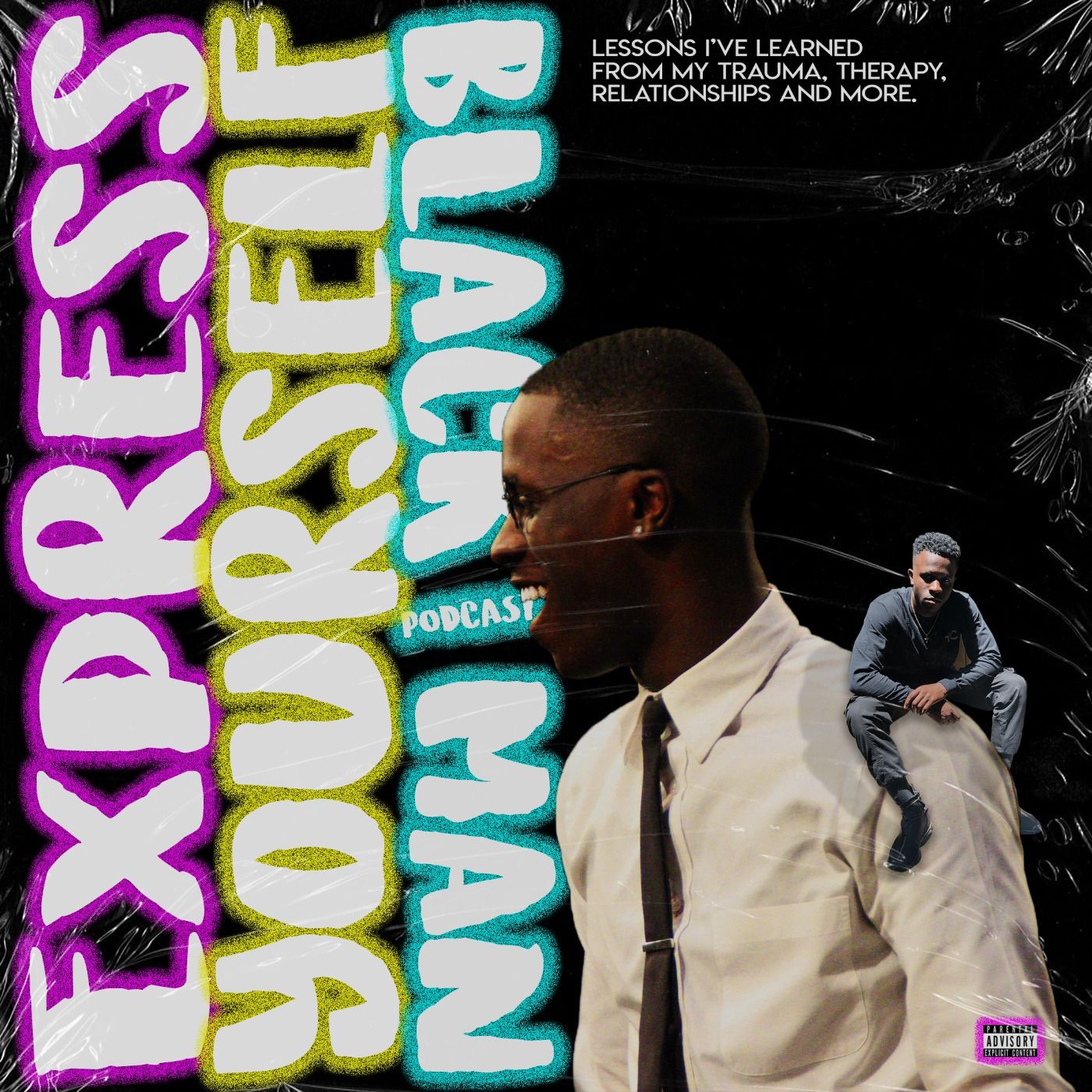
Scarred Sons Podcast
Scarred Sons — A Podcast for Men Who Carry What They Don’t Talk About
Scarred Sons is a refuge for every man who’s ever held pain in his chest, questions in his mind, or memories he never had space to unpack. This audio-only journey is raw, honest, and rooted in growth.
Hosted by Ty, just a man navigating his own story of scars, healing, faith, and becoming. Each episode opens the door to real conversations about mental health, emotional resilience, masculinity, and spiritual grounding. No masks. No clichés. Just truth spoken from experience.
Here, we honor one truth:
Your scars aren’t signs of weakness… they’re proof you’re still becoming.
If you’re ready to embrace your past, steady your spirit, and rise into the man you were meant to be…
Welcome home, Scarred Son.
Scarred Sons Podcast
I Didn’t Know I Was Still Surviving
Use Left/Right to seek, Home/End to jump to start or end. Hold shift to jump forward or backward.
Before we learn to heal, we learn to survive. Ty opens up about the quiet mechanics of survival—how silence, humor, polished appearances, and people-pleasing once served as brilliant, protective strategies and how they can quietly cap our growth as adults. This is a raw, grounded look at why we adapt early and what it takes to choose differently with compassion rather than shame.
We unpack silence as a safety strategy that followed Ty from childhood into boardrooms, where unspoken ideas stalled progress and delayed boundaries. We examine humor as cover—how making the room laugh can keep hard questions away—and what changes when one trusted person asks, “How you really doing?” We move through the armor of image: fresh fits, clean cars, easy smiles that say “I’m fine,” and the deeper need to be seen without a costume. Then we get practical about people-pleasing: the hidden cost of saying yes, the resentment tax, and how to practice a clean no without bulletproof stories.
Across the conversation, Ty reframes survival as intelligence under pressure. The goal isn’t to erase the boy who learned to stay safe; it’s to decide what leads now. Expect clear, real-world steps: building boundaries through 30 small reps, answering the second check-in with one true feeling, and replacing assumptions with curiosity. If you’ve ever hidden behind jokes or quiet, if your voice tightens at the thought of disappointing others, this episode offers a path to update your operating system with grace, self-respect, and presence.
Subscribe for more honest conversations on men’s mental health, personal growth, and healing. If the message hit home, share it with someone who needs it and drop a review telling us which old strategy you’re ready to retire.
Follow the show for new weekly episodes, discussing a journey of healing, growth, and becoming the man you were meant to be.
Connect with me on Instagram: @scarred.sons
If this episode spoke to you, share it with another Scarred Son on his healing journey.
This podcast is not a substitute for professional therapy. If you need help, please seek support from a licensed mental health provider.
From Survival To Self-Understanding
TyBefore I ever learned how to heal, I learned how to survive. Not intentionally, not consciously, but instinctively. Survival showed up as habits, as patterns, as reactions I thought were just who I am, but they weren't random. They were learned. They were the ways the little boy and me figured out how to stay safe. That's not who I am today, but it is how I learned to make
Show Welcome And Intent
Tyit through. Welcome to the Scarred Sons Podcast, where we dive into scars of life and the outcomes they shape. This podcast is a space for honest conversations about my journey, the lessons learned, the struggles endured, and the growth that followed. Geared towards helping other sons with scars. We'll explore topics like personal development, mental and spiritual health, and the path to becoming the best version of yourself. Let's navigate these challenges together, one story at a time. Let's dive in. The views expressed on this podcast are based on my personal experiences and insights. I am not a licensed therapist, counselor, or medical professional, and the content shared is not intended as a substitute for professional advice or guidance. Please consult a qualified professional for advice tailored to your specific needs. I am not responsible for any decisions or outcomes resulting from the use of this content. What's up to all my scar sons out there? I'm your host Ty. Before we dive in, I want you to know this is a safe space. I'm not here as someone who has it all figured out. I'm just a man willing to speak his truth. And if you carry any scars, welcome
Survival As Childhood Intelligence
Tyhome. Back in episode 9, The Little Boy and Me, I touched on some moments, some scenarios, some examples on when the boy showed up in my life. A lot of which I kind of just breezed over. So I want to dive a little bit deeper into some of those on this episode. Let's talk about it. This episode isn't about changing behavior, it's about understanding it. A lot of what shows up in my adult life started as protection in my childhood. Not because something was wrong with me, but because something required adaptation. Survival isn't weakness. It's intelligence under
Silence As A Safety Strategy
Typressure. One of the first ways I learned to survive was silence. Saying less felt safer. Staying quiet meant less trouble. Not because I didn't have anything to say, but because speaking didn't always feel safe. That silence didn't disappear as I got older. It followed me into relationships, into moments where my voice mattered. And I still found myself holding back. I can think on countless times and opportunities in different spaces and places where it was difficult for me to speak up. I mean, even in professional settings, you know, being upon being a part of visits from regionals or VPs and DMs and all these kind of different things. I was told, hey, why don't you share more of your ideas? Why don't you speak up more? Why don't you talk more? And it really was that little boy. That survival, trying to stay quiet so I don't ruffle any feathers, or trying to make sure I never said the wrong thing to make someone upset. I knew I had opposing thoughts in a lot of different scenarios, not just in my career, but mostly in my upbringing, my family life. See, I allowed people, I allowed my figures, I allowed my parents, friends, aunts, and uncles to speak up for me as a form of protection, but I never grew out of it. And so I found myself in a lot of different scenarios, you know, I can speak specifically where I may want to say something,
Boundaries Learned The Hard Way
Tybut I won't. And someone will step in for me, but I will never correct them whether that thought was right or wrong. I typically just let them say what they say, bail me out of jail, keep it moving. But one thing I learned from doing this is that it's harder to set boundaries later. People learn a version of you that they think they know because you never spoke up. They think they understand your thought process, they think they understand your actions and can place the person you are by the things that you do. But we don't give them much to go off of. And so they think it's true. But see, a lot of times, like right now, when I'm trying to create a uh a boundary or start something that's really me. Like I'm and it's crazy, but this is really me. But I've done the opposite for so long, it's puzzling to some. And so just like they always say, 30 days, it takes 30 days to build a habit. I believe that you have to stand behind your boundary in 30 different scenarios before you can really build that muscle. Before you can stop second guessing yourself, before you can stop going back and back and back, it's like you're reverting. It's like you almost get there. You almost like, man, I'm here, and boom. I go back to saying yes or something that I knew I didn't want to do. And so when I say 30 interactions or 30 ways to say no, or whatever your boundaries are, they're not always the grand things. It's the small things that people catch on to. It's the small things that you think people aren't being observant to, your patterns, your behaviors, your tone, the way your face clinches up when you're mad, or the way you can relax when people know that you're that you're comfortable. Maybe you slouch down your in your seat. Or maybe you release yourself a little bit, let your head down. These are all signals to people to so that they can understand who the real version of you are. I'm not gonna get too deep on that one, but silence is was a big part of my survival, big part of the little boy that kept showing up in me. And also a big challenge to step up to.
Humor As Cover And Control
TyAnother way I survived was humor. If I could make people laugh, they wouldn't ask how I was really doing. Laughter gave me control of the room, and control felt like safety. Over time, humor stopped being connection. It became my cover. If I know off jump, I'm going through something that I don't want you to know, or something I'm just trying to go through alone, or something I may need help with, but don't want to ask, I will use humor as a as a mechanism to deflect off what those feelings can do to your personal physique, what they can do to your face structure. When you're stressed, when you're going through things, people can see it in your eyes, they can see it in your face, your muscles, they can see it in your posture. But if I lead with humor, if I come in the room and I get you like I get you joking, I get you laughing, you're gonna automatically think I'm in a great mood. And if I can keep this up through the whole visit or through my whole time, my FaceTime with you, you'll never need to ask me a question about what I'm feeling inside. Because to you, I'm doing fine because I'm laughing. I'm doing fine because I'm making you laugh. We're having a good time. So I don't give you the opportunity to be able to say, You good? Everything alright? How are you doing? How is your mental? How was your day going? And I don't mean the the one-time question. See, I got a brother in my life that he knows some of the answers before he asks me, which prompts him to ask me the question twice. And so you can get away with saying, I'm good, man. But he always hits me with that. Now, how you really doing? And man, that's a stinger. That's that's that's one that I struggle with sticking and moving around, even if I try to include some humor. He knows. So that's one person I can't shake. Because we've grown together, we've been able to share stories together. It's a safe space. But a lot of other spaces out there in the world, you don't have that type of trust. And so you still default to the humor. It's easy, it's nice, I can I can get in, I can get out, you won't ask me too much, and I won't feel like I gotta share, and then fall into the hole of oversharing.
Image, Attire, And Hiding In Plain Sight
TyAnother thing I paired with humor, especially when I went home, was my attire. I took a lot of pride in my appearance. Things that really didn't matter, but it was another way to make you knew that I was okay. If I could come home, got some nice rags on, new pair of kicks, clean car, there's no residuals, there's no residue of anything wrong. There's no reason to ask a question to someone that's showing up to you, smiling, laughing, joking, smelling good, looking good, color coordinated, clean, nice edge up, and armor on the tires. He got to be good. Ain't he laughing? So these are all mechanisms I use to survive, just to get through the day, just to get through some stuff that I got buried deep
People-Pleasing And The Cost Of Yes
Tyinside. I also learned how to adjust myself to keep people close. Agreeing, overgiving, avoiding conflict. I didn't learn how to say no. I learned how to stay. As an adult, that looked like choosing peace over honesty and dealing with the resentment later. Man, there's so many times where I chose to do something, I chose to say yes to something, it was a complete inconvenience to me. And I say yes anyway, I did it. I was like, man, why'd I do that? I get home. I'm like, why didn't I just say no? Why couldn't I just say, I got something to do? It is it sounds very easy, but it's very challenging to some of us. I think the first thing I thought about when I had to say no is covering myself. Always covering my steps. My mother told me a long time ago, if you tell one lie, you gotta keep telling more to keep your story together. So I got good at it. I got so good that before I even was gonna tell you no, I had to know the full story. I had to plan it out. All in my head. I didn't write nothing down. But if I knew I was gonna tell you no, and if you wanted me to show up somewhere, I'm gonna put together something realistic in my life and pair it up. Whether it was an inconvenience, whether it was a schedule conflict, or whether I had to just do something else differently. You wouldn't know because I was pairing it so well with my life that it all made sense. There was no reason for you to ask another question because the story was too bulletproof. But I learned that all I was doing with going through these things, having my story straight, or making sure I had a fresh pair of rags, armor oil on the tires, some good jokes, or just being silent. The real thing, you know, this all boils down to just surviving. We don't really look at it that way though. We look at it just trying to make it through the day,
Bulletproof Stories And Avoidance
Tywhich is is in a sense survival. But it's deeper than that. We're trying to protect you from our own problems. When you you when you're never really in control, anyways. It's like, man, I don't want to burden this person. I don't want to bring this person down. Or I don't want to be a disappointment in this person's eyes that I care so much about. We don't even bring ourselves to the having the conversation because it might not even go the way that we're thinking. You got some disappointing news. Some news that your parents has have maybe have gotten from another sibling or an aunt or an uncle. But you heard this story before, and when it was told, this person you look up to was completely disappointed, and it almost felt like you would never gain their support again. But we're looking through the lens of a lot of different people's past experiences and placing those conclusions on how those stories went on our own events that we're going through. I'm challenging myself now to get my own understanding of the answer. They say don't read a book by its cover. So I want to read some of the context to make sure I understand first. Before I place judgment on a situation, before I bring fear into my life, that's not even there. Before I generate
Leaving Survival Mode With Curiosity
Tya problem, before the problem arises, going through life with an open mind, stepping out of the survival mode, but it's been difficult. Survival kept me safe though, but it also kept me guarded. What protected me as a boy started limiting me as a man. Not because it was wrong, but because it was never meant to last forever. A lot of what we call survival as men started as protection as boys. The question now isn't why we adapt it, but whether we still need to live that way. If you recognize yourself in any of this, you're not weak. You just adapt it early. Those patterns didn't ruin your life, they helped you make it through. And now, as an adult, you are allowed to pause.
Updating The Operating System
TyYou are allowed to update some old strategies. You don't abandon the boy. You acknowledge him and you decide what leads next. And I know some of these things are gonna sound familiar because we've talked about them in these previous episodes, but I must repeat them because of how important they are. And I know where you are. If any of this resonates with you, these are extremely important. Pause, give yourself grace. Once you've given yourself grace, update your operating system just like you do on your cell phone, and don't abandon any past part of you. But you want to accept that, become aware of that, so that you can make a better decision for yourself in the future. Peace and love,
Closing Reflections And Community CTA
Tyy'all. Thank you for joining me on the Scarred Sons podcast. Remember, every scar tells a story, and every story has the power to inspire growth. If today's episode resonated with you, I'd love to hear your thoughts. Feel free to reach out and share your journey. Don't forget to stay up to date with the podcast by liking, commenting, and subscribing wherever you listen to podcasts. You can also follow us on Instagram at ScarredPeriod Sons for more content and updates. Until next time, keep moving forward, keep healing, and remember scars don't define you, they shape you. Stay strong, and I'll see you in the next episode. Peace.

Podcasts we love
Check out these other fine podcasts recommended by us, not an algorithm.
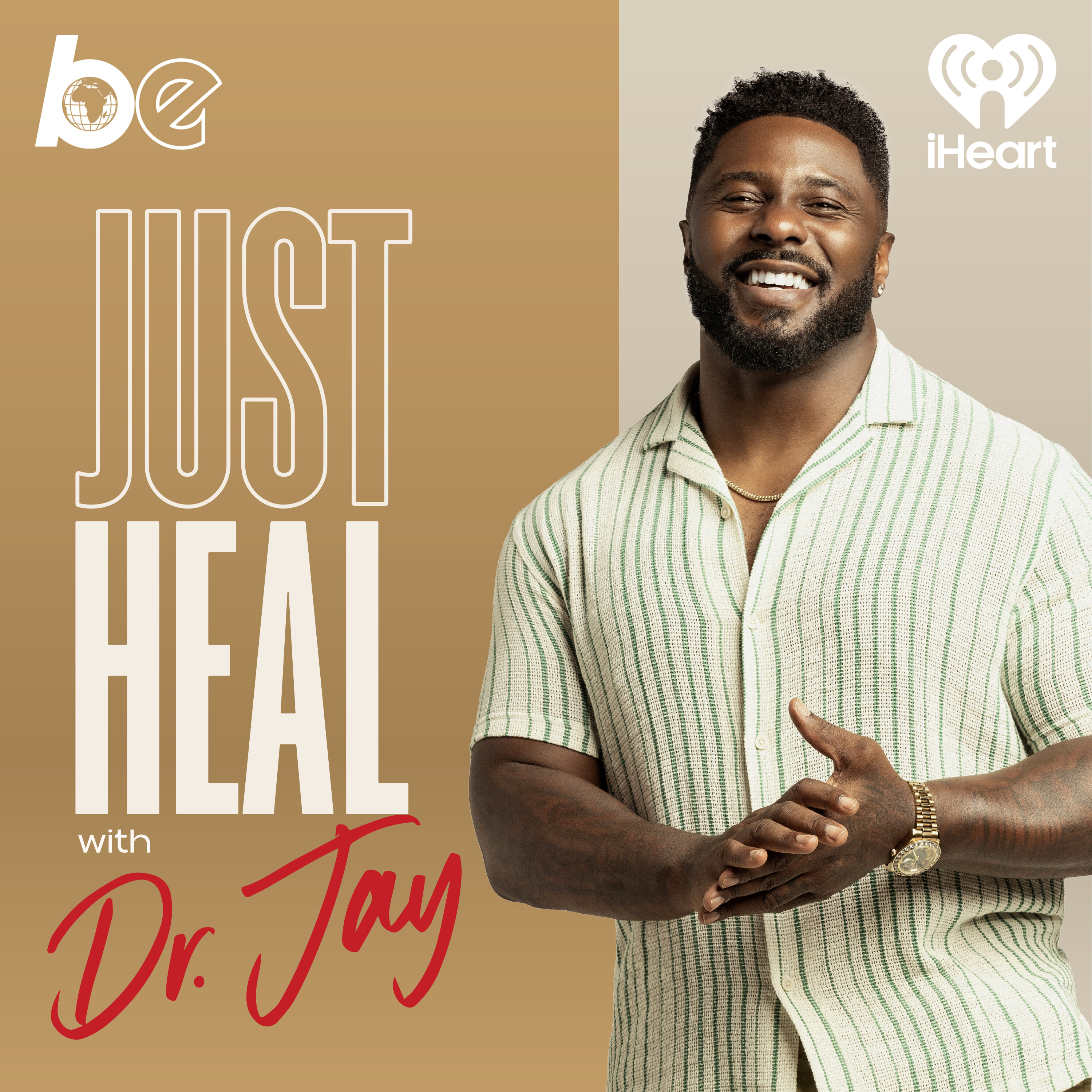
Just Heal with Dr Jay
The Black Effect Podcast Network and iHeartPodcasts